
During the last days of January, we gathered at Louisiana State University (LSU) for the first in-person convening of the Southeast Community Energy Futures Academy (SCEFA). After a virtual kickoff in December, this two-day workshop marked the beginning of something we have been building for a while. SCEFA is a community-engaged training and leadership program led by Georgia Tech’s Center for Sustainable Communities Research and Education (SCoRE). It brings together community leaders and technologists from across Mississippi, Georgia, Alabama, and Louisiana to learn about emerging energy transition technologies (EETTs) in relation to community visions and concerns. The program is part of the broader SEDAC project funded by the U.S. Department of Energy and led by the Southern States Energy Board.
EETTs -technologies such as carbon capture, utilization, and storage (CCUS), direct air capture (DAC), hydrogen production, renewable energy, battery storage, and others -aim to slow down climate change by transitioning energy away from fossil fuels to alternative sources and/or manage carbon after energy is produced. At institutions like Georgia Tech and LSU, we are very good at advancing the technical dimensions of these technologies. But many communities are already experiencing these technologies through local, social, and environmental realities; and are rarely involved early on in research or planning processes.
SCEFA emerged to address that gap. Rather than positioning technical experts as knowledge holders and communities as recipients, we are intentionally building a learning environment where technical knowledge and community knowledge are treated as equally necessary. The goal is not simply to inform communities about EETTs; it is to build capacity so that local leaders can engage with these technologies from research to deployment, and so that technologists can meaningfully incorporate community perspectives into the earliest stages of their work.
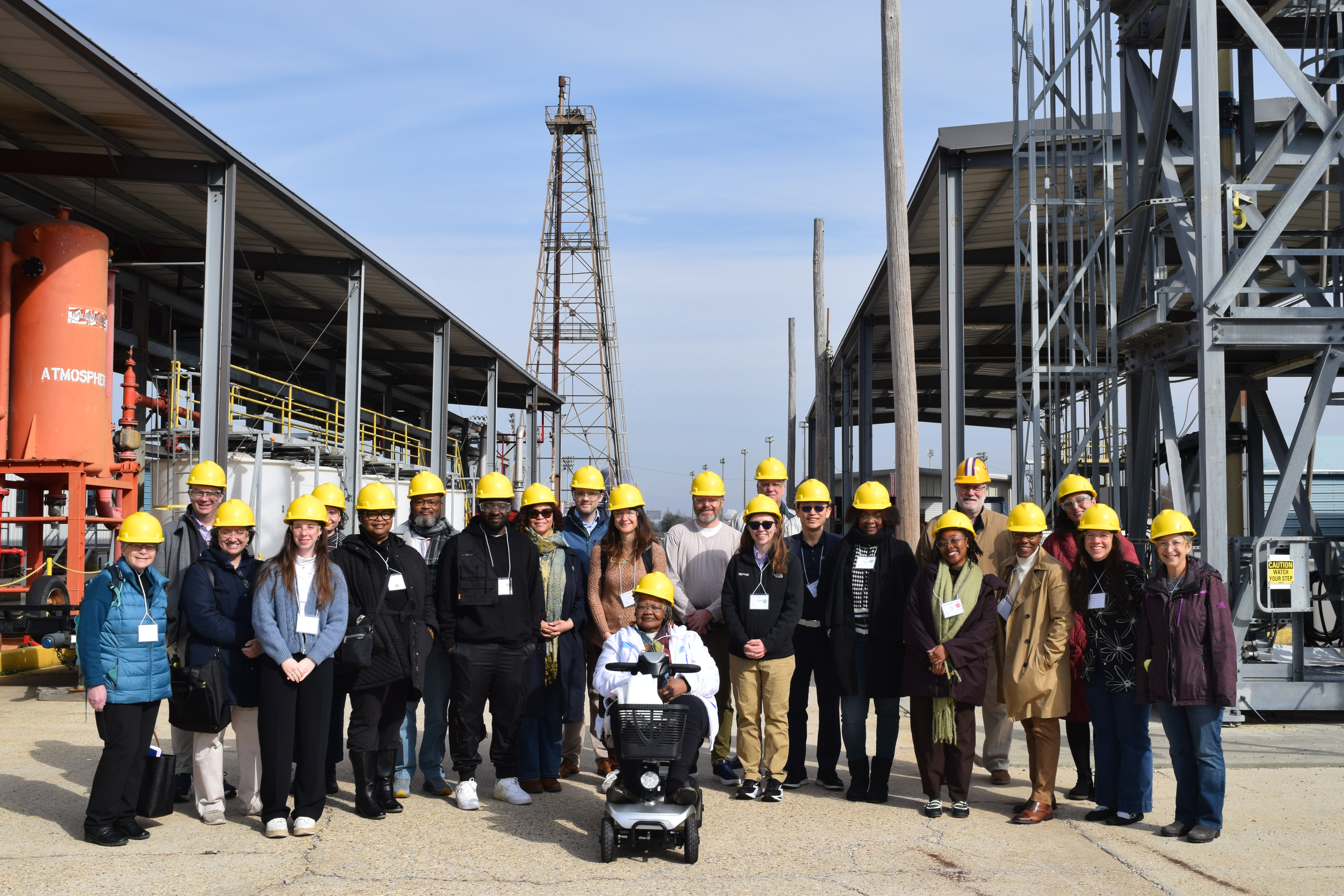
Who Was in the Room
Our pilot includes four state-based teams representing each of Louisiana, Mississippi, Alabama, and Georgia. Each team pairs community partners, organizers, capacity builders, local leaders,with technologists from Georgia Tech, LSU, and other institutions. The technologists were assigned based on the technologies each state team identified as relevant to their communities. Importantly, technologists participate as collaborators and learners,not just as content experts.
When we arrived at LSU, you could sense that people were ready to engage. It felt rare to be in a space with so many different types of people -including community organizers, academic researchers, and students -all bound together by questions about the future of emerging energy technologies in the Southeast.
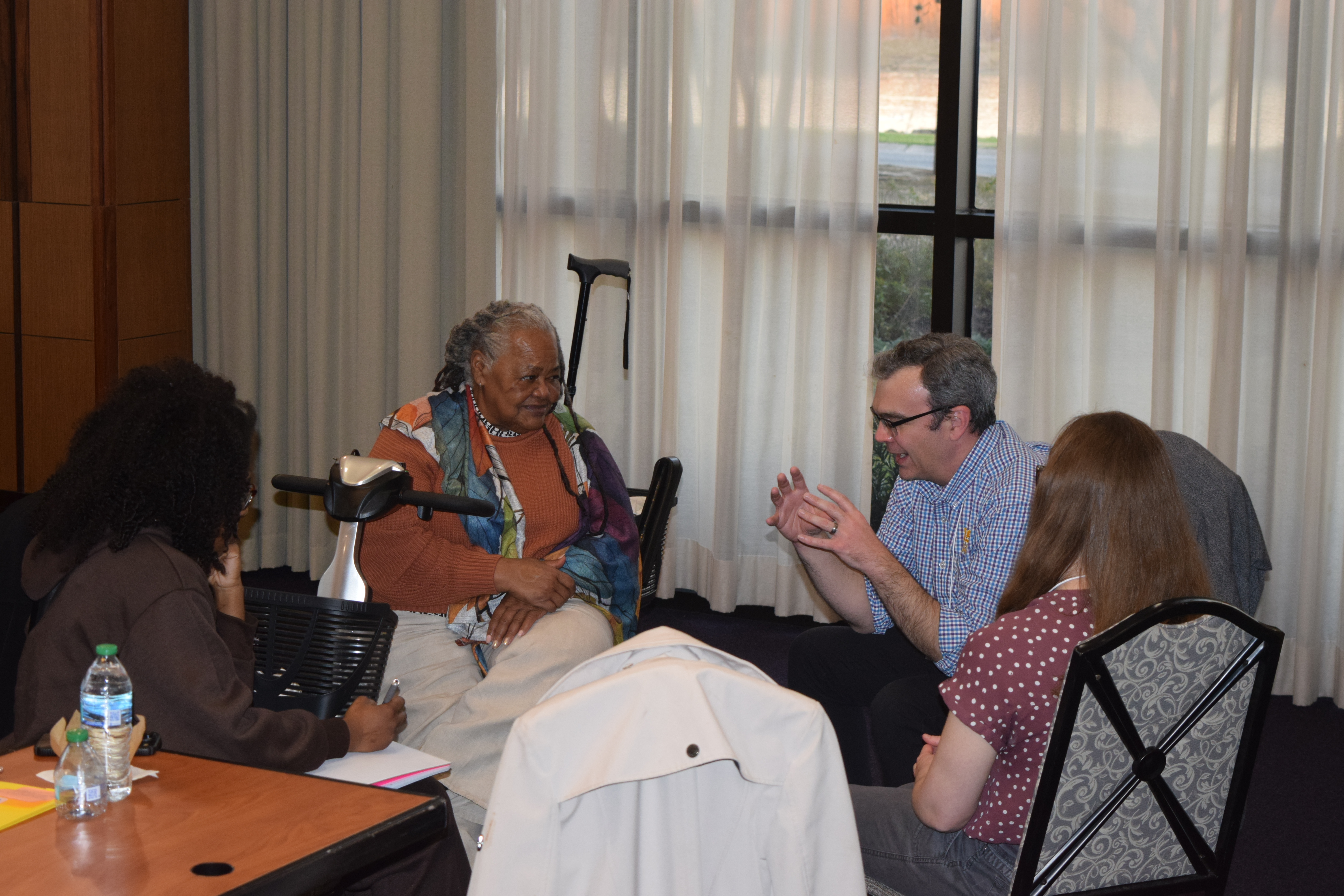
Over two days, we moved between technical presentations, panels with academics and community leaders, small-group discussions, team working sessions, one-on-one conversations, a mapping workshop, a lab tour, and a community tour. We relied heavily on mixed-table discussions to disrupt the typical expert-audience dynamic. Presentations were shaped by participant questions rather than by a fixed curriculum. We introduced participation guidelines and asked people to reflect on how they show up in conversations. These design choices matter. They signal that this is a space where everyone’s expertise counts.
Seeing Place, Not Just Technology
One of the most impactful parts of the workshop was the community tour. We traveled through areas shaped by existing industrial facilities and proposed industrial sites. We passed schools. We passed neighborhoods. We moved through different types of communities that are already navigating the realities of industry, infrastructure, and environmental risk. For some technologists, seeing these places added context that cannot be conveyed through data alone. One participant reflected afterward that it “made more sense now” why mistrust exists. That acknowledgment matters. It does not resolve disagreement, but it re frames it. When conversations about CCUS or DAC remain abstract, they can feel purely technical. But when you see the history of industrial promises in a place, and the uneven distribution of benefits and burdens, questions about deployment take on a different dimension.
Hosting the workshop at LSU added another layer. Louisiana is deeply embedded in conversations about CCUS and other large-scale industrial technologies. Being on campus, engaging with the research happening there, and then stepping off campus to hear community perspectives created a productive juxtaposition. It showed that these conversations are not hypothetical; they are already unfolding.
Disagreement as Learning
In spaces like this one, wherein participants often arrive with strong positions, whether they be from academia or community organizing, defensiveness can easily shut down conversation. But what I took away from this convening is that disagreement does not necessarily derail learning. Additionally, intentionally creating a learning environment with mixed groups, guided discussions, and clear participation principles, allows disagreement to become productive rather than divisive. When people come in willing to listen, differing perspectives re frame learning rather than derailing it. Many of the challenging conversations centered around familiar but difficult questions: Who bears risk? Who receives the benefit? Is that tradeoff justifiable? What do ownership and accountability look like in practice? How do we equalize power so that being “at the table” is meaningful?
These are not questions with simple answers. But part of building capacity, for both communities and technologists, is learning how to discern which questions to ask, which arguments to interrogate, and how to distinguish evidence from rhetoric. Sometimes, as one participant noted, we do not even know what questions we should be asking. Surfacing those “unknown unknowns” is itself a meaningful outcome.
Why This Feels Different
I have been working on SCEFA in the planning stages for some time. Seeing it take shape in person -watching people test ideas, challenge assumptions, and identify new directions - felt powerful.
One of the risks of this approach is that we do not have everything predetermined. We do not walk in with a fully fixed curriculum for the entire year. Instead, we plan to adapt. If participants express interest in policy, storage risks, materials, or economic implications, we build future sessions around those needs. That flexibility can feel uncertain, but it also allows the program to be responsive and actionable.
After the workshop, I heard from technologists who felt more motivated to integrate community engagement into their research. I heard reflections about rethinking how research findings are shared with communities. Those shifts, even small ones, are part of why this work matters.
SCEFA is not about convincing anyone that a particular technology is inherently good or bad. It is about creating conditions where community perspectives shape research earlier, where technologists better understand place-based realities, and where local leaders are equipped to engage with complex technologies on their own terms.
What Comes Next
Participants are now developing their own deliverables. These are tailored to their state contexts and community priorities. We will hold working sessions to support that development, followed by several virtual workshopsthis spring. Our next in-person convening will take place over the summer in Mobile, Alabama, near the proposed SEDAC hub site.
If this first gathering showed anything, it is that designing intentional learning spaces is both challenging and necessary. SCEFA demonstrates that when communities and technologists learn together, meaningful insights emerge, not just about technology, but about power, place, and accountability. It’s a reminder that collaboration is not optional; it’s essential for the future we want to build.
Learn more about SCEFA here